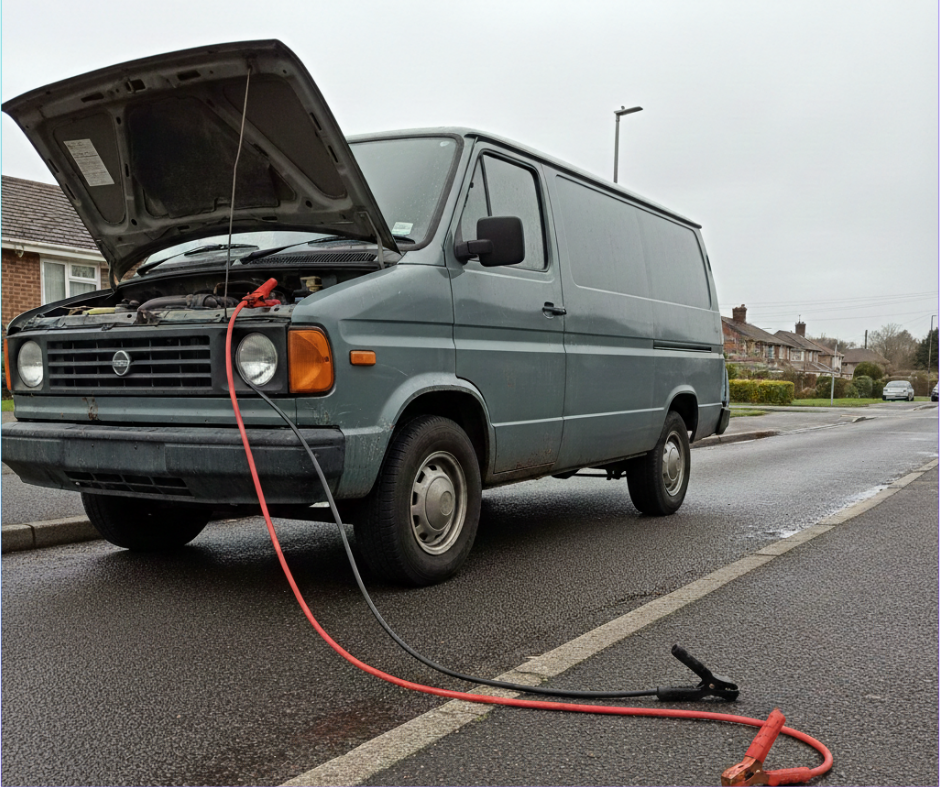
The Van That Wouldn't Start (And the Team Members You've Forgotten) Post
The Van That Wouldn't Start (And the Team Members You've Forgotten)

It was Sunday, and it was my turn to do the shopping.
My wife and I take it in turns, a week each, because neither of us particularly likes going to the supermarket and doing the weekly food shop.
My daughter and my wife were out, so I thought, right, I'll take the van. We don't use the van all the time. We really only need it when we're moving big things or when we both need a vehicle. Otherwise, we use the car.
The car's nicer. It's newer. It's a posh car. It's easier to park. It's just... the thing you'd choose if you had the choice.
But today, I needed the van.
So I went out, climbed in, and turned the key.
And it spluttered. It coughed. But it wouldn't quite start.
Oh dear.
I thought I'd leave it a minute and try again.
This time, I got even less out of the engine. Hardly a splutter. More of a tick. Tick, tick, tick. Tick, tick.
Ah. The battery was flat.
The Van That Sits There When You Don't Need It
So I rang my wife. She was on her way back anyway, so I waited.
And while I waited, I thought about the poor old van.
We don't use it all the time, you see. It sits there. Ready. Waiting for when we need it.
And when we do need it, it's brilliant. It does the job. Moves the big stuff. Carries what the car can't.
But most of the time? We forget about it.
We take the car. The nicer one. The easier one. The one that's more fun to drive.
And the van just... sits there.
Until the day we actually need it. And then we're annoyed when it doesn't start straight away.
My wife came back. I connected the jump leads. And on the first turn of the key, the van roared into life.
Just needed a bit of attention. A bit of a charge. A reminder that it was still needed.
And it reminded me of something I see all the time with managers and their teams.
The People You Only Remember When You Need Them
We forget about some of our people.
Particularly the remote ones. The ones who work from home. The ones who aren't in the office every day, aren't in our faces, aren't constantly visible.
They're there when we need them. They do the task. They do it competently and efficiently. And then we carry on.
And some of the rest of our team? We tend to send the more exciting stuff to them. The high-profile projects, the interesting challenges, the things that get attention.
But we have people in our teams who quite happily plod on and do the backbone work.
Just like the van.
And you know what? If you take them for granted for too long, they might splutter and cough.
They might wonder why they're not being used to their full potential. Why are their abilities not being recognised? Why they feel a little left out as they work remotely.
Just like the van was left out.
Because the van was always quite capable of taking me to the shops and bringing the shopping back. There's plenty of room for shopping in the van. And in the supermarket car park, there's plenty of room to park it, so it's not even a problem.
The van could have done the job all along.
But I chose the car instead. Because it was easier. More convenient. More enjoyable.
And our teams might feel the same at times.
All They Need Is a Check-In
Here's the thing about the van:
As soon as I connected the jump leads, it fired back into life.
It didn't need a full service. It didn't need replacing. It just needed a bit of attention. A bit of a charge.
And sometimes, all we need to do with our remote workers—with the people who quietly get on with it without making a fuss—is make that connection.
Check in. Not just about the work. About them.
"How are you doing? Do you still feel part of the team? Are you okay?"
Not "Can you get this task done?" or "Have you finished that report?"
Just... "Are you okay?"
Because that's how we treat our people fairly. That's how we ensure we don't forget about the people who aren't just in our faces. The ones we see in the office, the ones we speak to frequently.
The ones who might plod on, who are the backbone of the team.
They deserve it. And we owe it to them.
To make sure we look after them as much as the more confident, loud, outgoing members of the team.
Why We Forget the Reliable Ones
Here's the trap we fall into:
We assume that because we're not hearing that there's a problem, everything's okay.
And that might be true from a work point of view. Your remote team might be getting on with it. They're working with due diligence. They're ensuring the work gets done.
But that's only half the picture.
Because they're a person. And they're part of your team.
And we have a responsibility to make sure they feel part of that team. As much as the people we see in the office every day.
The psychology behind this is simple: visibility bias. We pay attention to what's in front of us. The person who's always in the office, always speaking up in meetings, always visible—they get our attention by default.
The person working from home three days a week? The quiet one who just gets on with it? They're out of sight, and unfortunately, often out of mind.
But "out of sight" shouldn't mean "out of care."
Who's Your Van?
So let me ask you:
Who's the person on your team who quietly gets on with it, who's always there when you need them, who does the backbone work without making a fuss?
And when was the last time you checked in with them? Not about the work. About them.
Because here's what happens when you don't:
They start to feel like the van. Useful when needed. Forgotten the rest of the time.
And eventually, their battery runs flat.
They lose motivation. They stop feeling part of the team. They wonder why they're bothering.
And one day, when you really need them, they won't start.
They'll have left. Or worse, they'll still be there physically, but mentally, they checked out months ago.
What Effective Check-Ins Actually Look Like
This isn't complicated. You don't need a formal process or a scheduled monthly one-to-one (though those help).
You just need to make the connection.
For Remote Workers:
"How are you finding working from home this week?"
"Do you feel like you're getting enough interaction with the team?"
"Is there anything you're working on that you'd like more visibility for?"
For the Quiet, Reliable Ones:
"I realise I always come to you for the backbone stuff because you're so reliable. But is there anything more challenging you'd like to get involved in?"
"I don't want to take you for granted. How are you actually doing?"
"What's one thing I could do as your manager that would make your week better?"
That's it. That's the jump leads.
Just making the connection. Showing them they're not forgotten. Reminding them they're valued, not just useful.
The Van Started Straight Away
Here's what struck me when I connected those jump leads:
The van didn't need much. Just a bit of charge. And it roared back to life.
Your team members are the same.
They don't need a complete overhaul. They don't need you to suddenly give them the "posh car treatment."
They just need to know you haven't forgotten about them.
That they're not just the backup option. That they're part of the team, even when they're not in your face every day.
The People Who Keep Things Running
The van isn't flashy. It's not the vehicle I'd choose for a nice day out.
But it's the one that moves the heavy stuff. It's the one that does the job when the job needs doing.
And those quiet, reliable team members? The remote workers who just get on with it? The ones who do the backbone work without complaining?
They're the ones keeping your team running.
Don't wait until their battery's flat to realise how much you need them.
Check in. Make the connection. Show them they're valued.
Because when you do, they'll roar back to life. Every time.
Frequently Asked Questions
How often should I check in with remote team members?
At minimum, schedule a dedicated one-to-one every two weeks that isn't just about task updates. But informal check-ins should happen weekly—even just a quick "How's your week going?" message shows you're thinking about them. The key is consistency. Remote workers need to know they're not forgotten, even when they're not physically visible.
What's the difference between micromanaging and checking in?
Micromanaging is about control and task monitoring: "Did you finish that report? What are you working on right now?" Check-ins are about connection and support: "How are you doing? Do you have what you need? Is there anything I can help with?" One focuses on outputs; the other, on the person. Your reliable team members don't need micromanaging—they're already delivering. They need to feel valued.
How do I identify who's being taken for granted on my team?
Ask yourself: Who do I automatically assign the "boring but essential" work to, knowing they'll just get it done? Who never complains or asks for anything? Who works most of the time remotely and rarely speaks up in meetings? Who have I not had a proper conversation with in the last month? These are your "vans"—the people who are reliable, capable, but possibly feeling overlooked.
What if my team member says "I'm fine" when I check in?
"Fine" often means "I don't think you really want to know" or "I don't want to be a burden." Try follow-up questions: "What's been the best part of your week?" or "If you could change one thing about how we work together, what would it be?" Sometimes people need permission to share honestly. The fact that you asked once doesn't mean they'll open up immediately. Consistency builds trust.
How can I make remote workers feel more included in the team?
Beyond regular check-ins: Include them in informal conversations, not just formal meetings. Tag them in team chat banter. Acknowledge their contributions publicly. Ask for their input on decisions, not just updates on tasks. Celebrate their wins the same way you celebrate office-based team members' wins. Remember: inclusion isn't about location, it's about intentional connection.
Ready to Stop Taking Your Team for Granted?
If you're managing a remote team (or a hybrid team, or any team where some people are easier to forget than others), come join The Empowered Leader's Circle.
It's free, and it's where we help managers lead ALL their people, not just the loud ones.
And if you're struggling to connect with your team—whether they're remote, in the office, or somewhere in between—I'm launching something very soon that'll help.
EI-Unleashed in Action is launching in the next two weeks. It's a practical course that shows you exactly how to manage the emotional side of leadership—the check-ins, the connections, the conversations that actually matter.
It's not theory. It's the techniques that work when you've got 15 direct reports, three restructures in two years, and team members you're accidentally forgetting.
Early access to community members first. Keep an eye out.
Stop managing by visibility bias. Start leading with intention.
Jon Manning
Former Retail Operations Manager | Author of Emotional Intelligence Unleashed (I made every mistake first)


